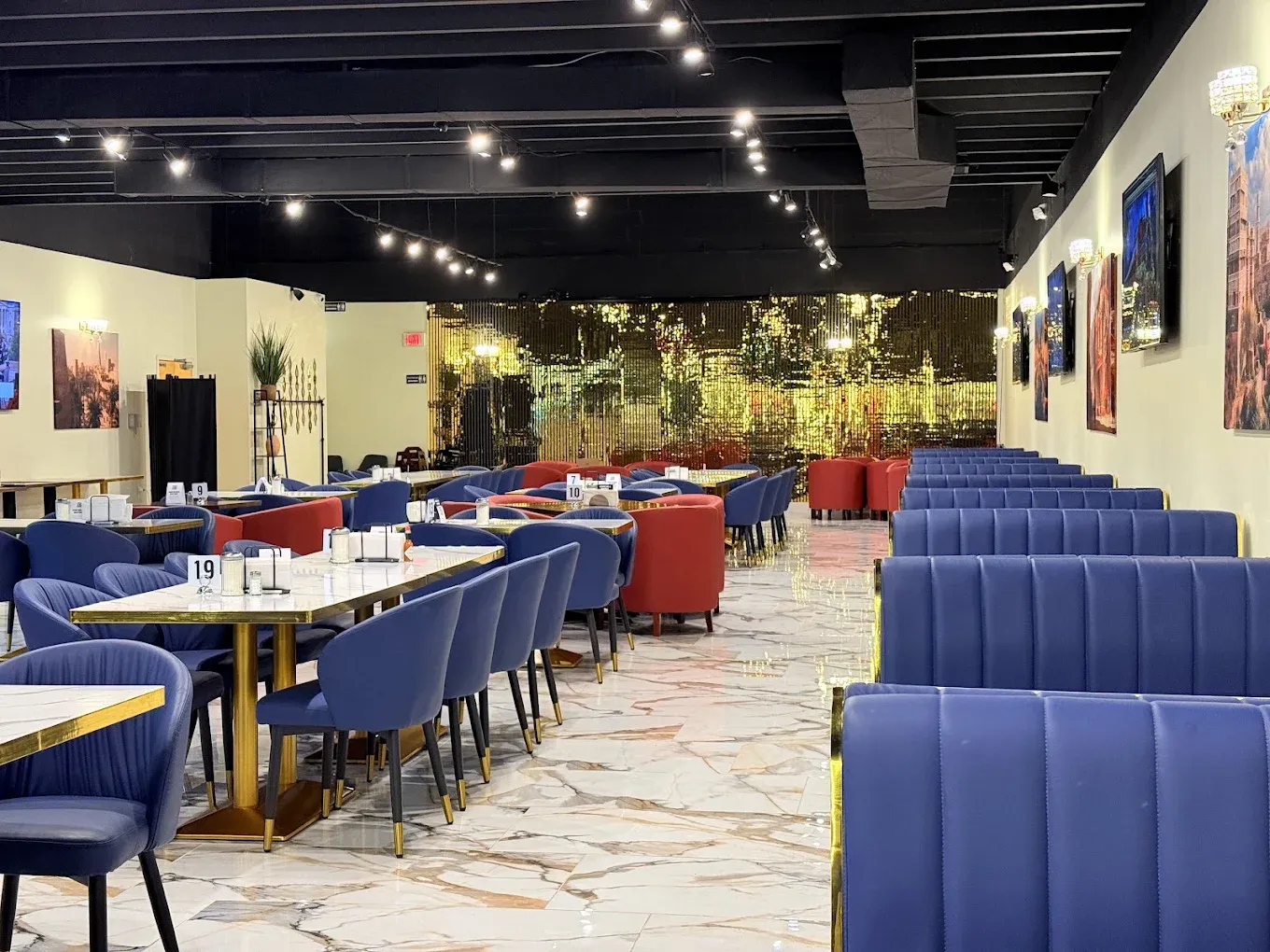
A practical guide to ordering family-style at SimSim across both kitchens: Palestinian mezze and centerpieces, Ukrainian starters and shared plates, sized for tables of three, five, or eight.
At SimSim, we don't really do "my plate, your plate." The table fills first, then everyone digs in together — starters arriving in waves, a shared centerpiece landing in the middle, bread or a spoon doing work a fork alone can't. That's how we built both sides of our menu to be eaten, Palestinian and Ukrainian alike, and it's the format we'd recommend to any table with more than one appetite. The two kitchens don't blend onto a single plate, but they share the same spirit — unhurried, generous, built for reaching across the table. Here's how we think about ordering either one well, or both, at whatever size your group happens to be.
Two Kitchens, One Table
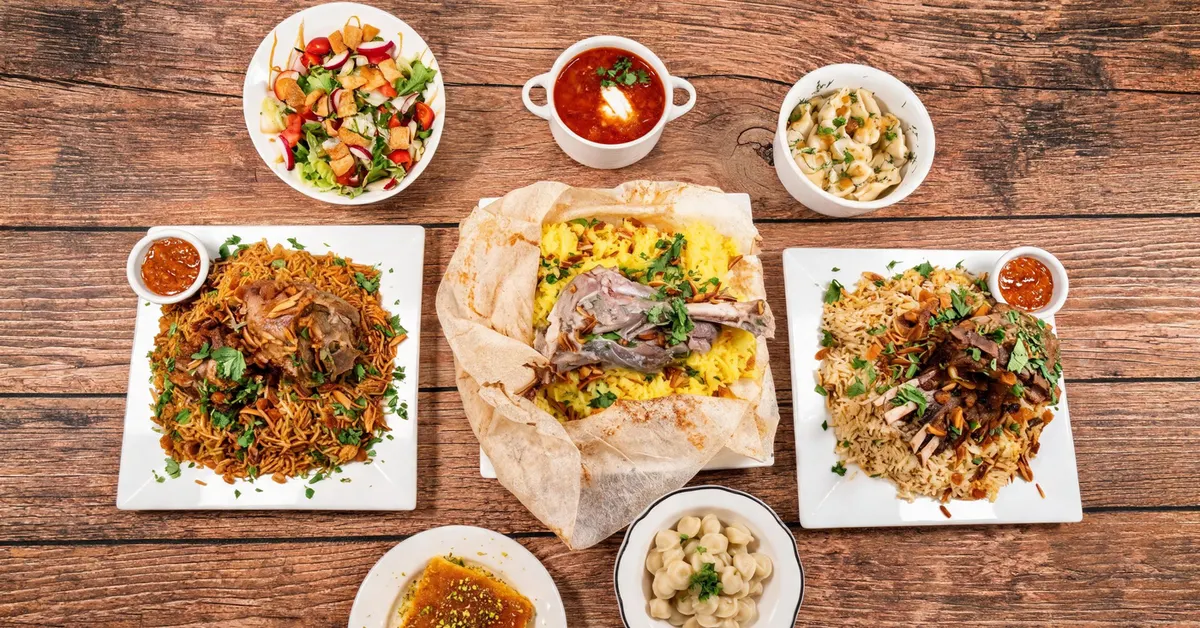
You won't find Mansaf and Borshch sharing a single platter here — each tradition keeps its own centerpiece and its own rhythm at the table. What they share is the format: small plates first, one or two big shared dishes in the middle, and dessert passed around rather than plated per person. A table of two or three usually does best picking one kitchen to center the meal on. A bigger group — five, eight, more — has room to run both traditions side by side, a Palestinian centerpiece on one end of the table and a Ukrainian one on the other, with everyone reaching in both directions.
Starting from the Palestinian Side
On this side of the table, we like to see mezze land first and together — hummus and baba ghanoush for scooping, dolma rolled tight and cool, fatayer bi sabanekh warm from the oven, tabbouleh and fattoush for the sharp green contrast the richer dishes need. Add manaeesh torn and passed hand to hand, and a bowl of lentil soup or Palestinian freekeh soup if the table wants something to spoon before the bigger plates arrive; falafel, crisp end to end, belongs here too. Once the mezze is half-cleared, bring in one centerpiece — Mansaf pulled apart at the table under its tangy jameed sauce, Kabsa with its warmer spice through the rice, slow-roasted Haneeth, or our Palestinian-style stuffed sea bass when the group wants seafood at the center instead. For an occasion worth planning ahead, ask about Maqluba, our upside-down rice dish, available by special order a few days out.
Starting from the Ukrainian Side
The Ukrainian table opens the same way — plates that get the group talking before the main dish arrives. Borshch, deep red and slow-simmered, is the one we'd start with; Olivier Salad, Vinegret, and Kyiv Caesar Salad round it out with texture and a cool contrast of their own. From there, the centerpiece is usually a few shared plates rather than one dish: Holubtsi wrapped tight and sauced, Potato or Cabbage Varenyky by the plateful, Pelmeni for a table that wants something smaller and rounder, or Deruny — with mushroom sauce or ricotta — alongside savory Mlyntsi filled with chicken and mushroom or salted salmon and cream cheese. Order two or three of these to the middle rather than one apiece; that's how the table is meant to work through them.
Sizing It for Three, Five, or Eight
Family-style ordering scales by centerpiece math more than by headcount, and the pattern holds whichever kitchen, or both, you're building from.
- Three at the table keeps it simple: two or three starters and one centerpiece, whether that's Kabsa and Mansaf or a plate of Holubtsi with Borshch on the side.
- Five at the table does better with four or five starters for real variety, one centerpiece, and a grilled add-on like lamb kabob or chicken shish taouk to give the middle more to reach for.
- Eight at the table is where two centerpieces earn their place — Mansaf alongside Haneeth, or a spread of Varenyky and Holubtsi next to a Palestinian centerpiece — paired with a full round of starters so nothing runs out halfway through.
More From Either Kitchen
For groups on the larger end, or anyone who wants more variety without adding a second centerpiece, our grill is built for exactly this. Lamb kofta, lamb chops, beef kabob, chicken kofta, chicken shish taouk, and whole chicken tikka each arrive over seasoned rice and pass down the table as easily as a mezze plate; oven-baked kofta is the one to order if the table wants something saucier than the charcoal grill gives you, and our mix grill does the whole job in a single order. On the Ukrainian side, the same logic applies — a second plate of Varenyky or another round of Holubtsi keeps the table stocked as easily as a second skewer does. Sandwiches — chicken shawarma, lamb shawarma, kebab doner shawarma, the falafel sandwich — are built for one person, so we'd save those for a solo lunch and keep bigger tables on the shareable plates.
Finish the Way We Do
We rarely let a shared table end without dessert landing in the middle the same way everything else did. On the Palestinian side, that's kunafa or baklava, cut so every hand can reach it, alongside a round of tea — Jerusalem, Cairo, Baghdad, or Casablanca — or Turkish coffee if the table wants something stronger to close on. On the Ukrainian side, it's honey cake or syrnyky with a glass of uzvar. Either way, dessert stays family-style, not portioned per person, the same key the meal started in, carried all the way through.
Bring your table in hungry and let us build it with you, from either kitchen or both — Mansaf, Kabsa, or Haneeth on one end, Holubtsi, Varenyky, or Borshch on the other, and dessert shared at the end. Come taste what a table built for sharing, two traditions at once, is supposed to feel like.