A behind-the-grill look at how SimSim manages a live charcoal fire — building heat zones, chasing real char without burning, and why charcoal gives kebabs a flavor gas can't match.
Behind our kitchen line, a bed of charcoal is either building toward the right heat or it isn't — there's no dial to turn and no flame to adjust with the twist of a knob. Everything about how a kebab or a lamb chop tastes when it reaches your table starts with a fire that someone tended, watched, and shaped by hand, coal by coal, long before an order ever hits the line. A great charcoal grill isn't really a piece of equipment so much as an ongoing decision, made over and over through a shift: how hot, how close, how long, and when to pull something back before char turns to ash. It's a skill our grill cooks practice every service, and it's a large part of why our kebabs taste the way they do.
Why Charcoal Changes the Flavor
Charcoal and gas can both get a grate hot, and how much hotter charcoal actually runs is something grilling writers still argue about — a well-tuned gas grill can climb higher than people expect. What isn't up for debate is what happens underneath the meat. As fat renders off a skewer of Lamb Kabob or Beef Kabob, it drips onto the glowing coals and turns instantly to smoke, carrying aromatic compounds a sealed gas burner rarely produces in the same amount, simply because there's no fat hitting real charring coal underneath it to begin with. Gas is cleaner and more predictable, which is part of why it's so common in home kitchens, but predictability isn't what gives grilled meat its depth. The faint char and the perfume that clings to a Chicken Shish Taouk skewer here come from that rising smoke, not a dial setting — it's the fat hitting real coal, not extra heat, that a gas burner can't quite fake no matter how high it's turned up.
Building a Fire With Zones, Not Just Heat
A single flat bed of coals cooks everything the same way, which is almost never what a dish actually needs. Good charcoal cookery means building the fire unevenly on purpose — a fierce zone for the first sear that sets the crust on Lamb Kofta or Chicken Kofta, and a gentler zone nearby where the center can finish cooking through without the outside sliding past char into burnt. A whole bird like our Whole Chicken Tikka needs an even more patient plan: it spends most of its time over the cooler side of the fire, cooking on steady ambient heat, and only visits the hottest coals at the very end, just long enough to color the skin without drying the meat underneath. Move a piece to the wrong zone at the wrong moment and the whole timing of a dish falls apart, no matter how good the marinade underneath it was.
Char Without Burning
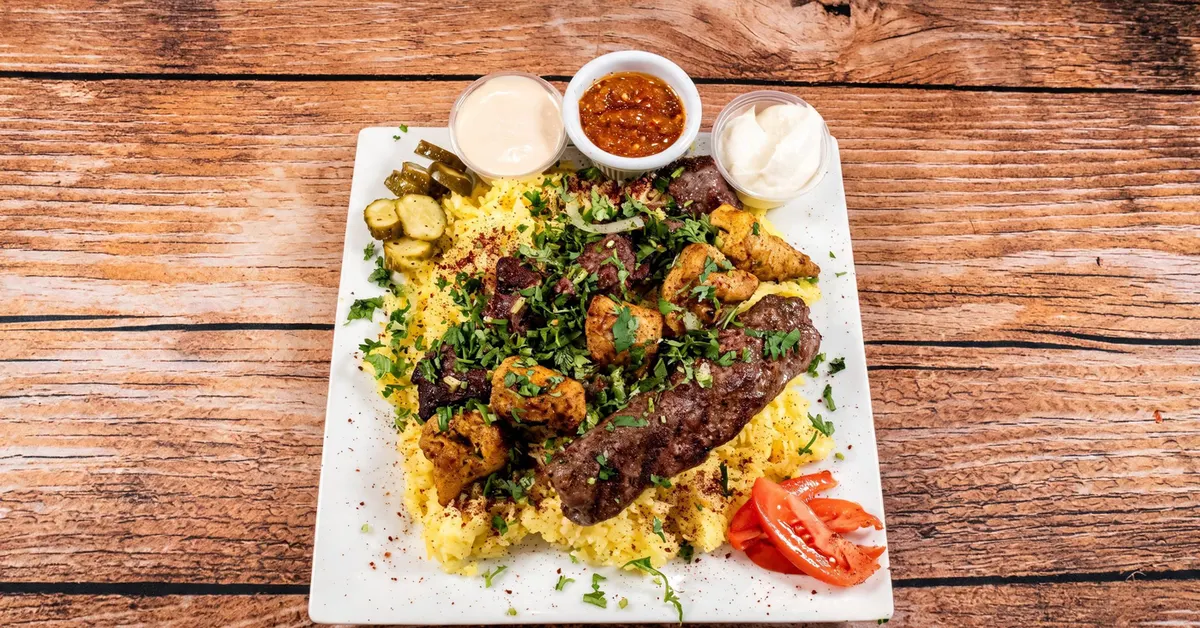
The line between the char everyone wants and the burn nobody wants is thinner than it looks, and it gets measured in seconds, not minutes. Char is caramelized sugar and browned protein — the crackle on Lamb Chops, the color across a Mix Grill platter, the faint bitterness at the very edge that makes the rest of the bite taste sweeter by comparison. Burnt is just carbon, and carbon only tastes bitter, with nothing underneath to balance it. Getting one without sliding into the other takes constant attention: turning skewers often, sliding a piece off a flare-up the moment fat catches, and never assuming a fire will behave the same way for the twentieth skewer as it did for the first — coals cool and shift with everything that touches them, and a grill cook has to keep reading the fire rather than trusting the last read.
- Ash gone gray-white across the coals, not orange flame still licking through — that's steady heat, not raw fire
- A dripping flare-up moved instantly to a cooler zone, never doused where the meat is sitting
- A steady, even sizzle — when the sound turns sharp and dry, the fire is running too hot
- Skewers turned every couple of minutes, never left resting in one spot long enough to scorch
Patience Before the First Skewer
A fire needs time to mature before it's ready to cook on. Coals get lit well ahead of service and allowed to burn down past that first aggressive flame into a steady, even glow, with ash forming across the surface, before the first skewer ever goes on. Rush that step and you get flame-driven cooking instead of the steady radiant heat that produces real, even char — food that scorches on the outside while staying underdone inside, which is the opposite of what anyone wants on their plate. The fire doesn't care how busy the dining room is or how many tickets are waiting; it's ready when it's ready, and that patience is the one shortcut we won't take, service after service.
Order the Mix Grill and you'll see three different moments of the same fire on one platter — our three signature kebabs, chicken, lamb, and beef, each pulled off the coals at its own point of char. Come taste what a real charcoal fire does that a burner never quite can.