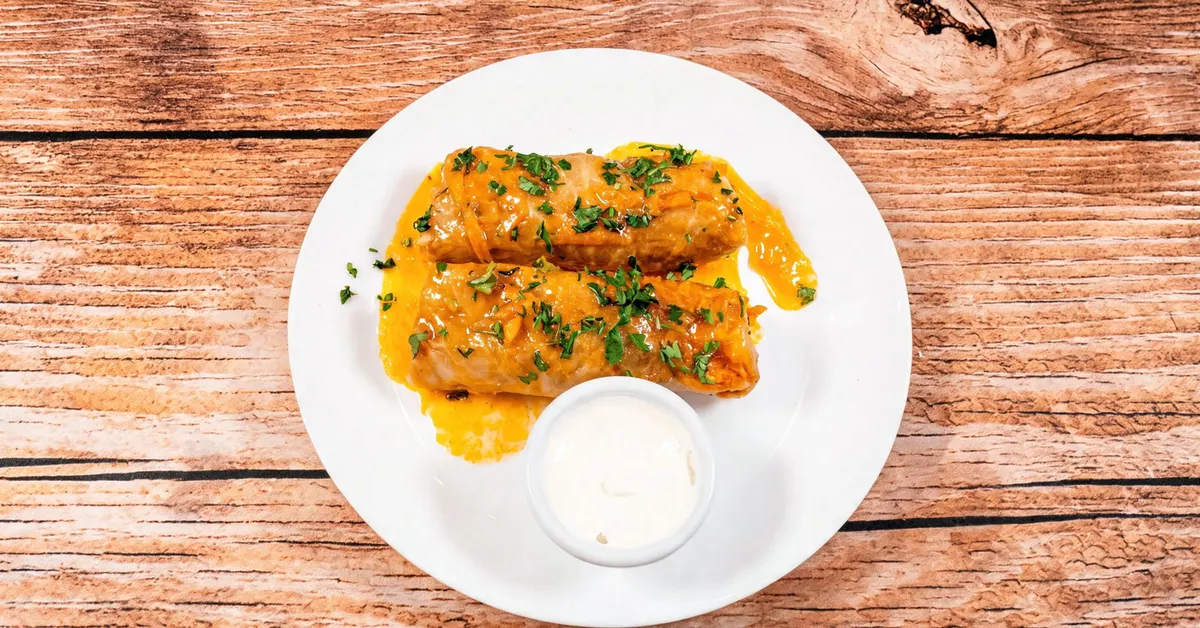
How SimSim rolls and slow-braises holubtsi in our Fairfax kitchen — softened cabbage leaves, a halal rice-and-meat filling, and a patient tomato braise that make this Ukrainian classic one of our signature comfort dishes.
Some dishes arrive at the table looking like they have nothing to prove. Holubtsi is one of them — a shallow dish of pale cabbage bundles sitting quietly in tomato sauce, giving away nothing about the hour of work behind it until you cut into the first one and a tender leaf opens onto rice and meat that have spent that whole hour simmering into each other. At SimSim, on Main Street here in Fairfax, holubtsi is one of the dishes our Ukrainian kitchen builds the same unhurried way it always has, with halal ground meat and a stovetop, no shortcuts.
Coaxing the Leaf to Bend
Cabbage does not want to roll. A whole head is stiff and tightly wound, and the leaves nearest the core are thick enough to crack rather than fold. So the work starts with softening: whole heads go into simmering water just long enough for the outer leaves to loosen, then get peeled away layer by layer as they soften. Each leaf's thick center rib gets shaved thin so it bends instead of resisting — a leaf that fights the roll is a leaf that tears open in the pot and lets its filling spill into the sauce. It is fussy, unglamorous prep, and we have never found a shortcut around it.
Rice, Meat, and Onion
The filling stays simple. Rice is parboiled only partway, left firm enough that it still has cooking left to do once it is wrapped, so it finishes inside the leaf and draws in the flavor of the sauce around it. Halal ground meat and onion, cooked down until the onion turns sweet, round it out — seasoned plainly enough that the cabbage's own mild sweetness still comes through. A spoonful goes into the center of each leaf, the sides fold in over it, and a tray fills with identical, tightly wrapped rolls, one after another.
The Slow Braise
From there, holubtsi lives and dies by patience. The rolls go seam-side down into a wide pot, packed close enough to hold their shape, and get covered in a tomato sauce built from the same sautéed onion and carrot that season much of our Ukrainian menu. Then the pot goes low and slow, no rushing and no lid off to speed it along, for an hour or more, until the cabbage is tender enough to cut with the edge of a spoon and the rice inside has given up its bite completely. A spoonful of sour cream at the finish is what a plate of holubtsi has always called for, and that is how we serve it.
What a Good Roll Depends On
Ask a Ukrainian cook what separates a good tray of holubtsi from an ordinary one, and the answer rarely changes:
- Leaves softened whole, never torn, so each roll holds together through an hour of simmering
- Rice left underdone going in, so it finishes cooking inside the leaf instead of outside it
- A filling seasoned lightly enough that the cabbage still tastes like cabbage
- A tomato sauce simmered long enough to thicken on its own, never thinned with shortcuts
Two Kitchens, One Patience
We could point to a dozen dishes on our menu and call any of them a signature, and holubtsi earns the word without needing help. It is not fast food, and it was never built to be one — a home cook starts it in the early afternoon so it is ready by evening, in stages that cannot be skipped: leaves softened first, filling mixed while they cool, rolling done one at a time, the braise given its full hour before anyone thinks about plating it. Cabbage rolls like this appear across Eastern Europe under different names in different homes, and we're glad to be one more table keeping the tradition going rather than staking a claim on where it started. That same patience runs through the rest of our kitchen too, Palestinian and Ukrainian alike, dishes built in stages and never rushed toward the plate.
On the Table
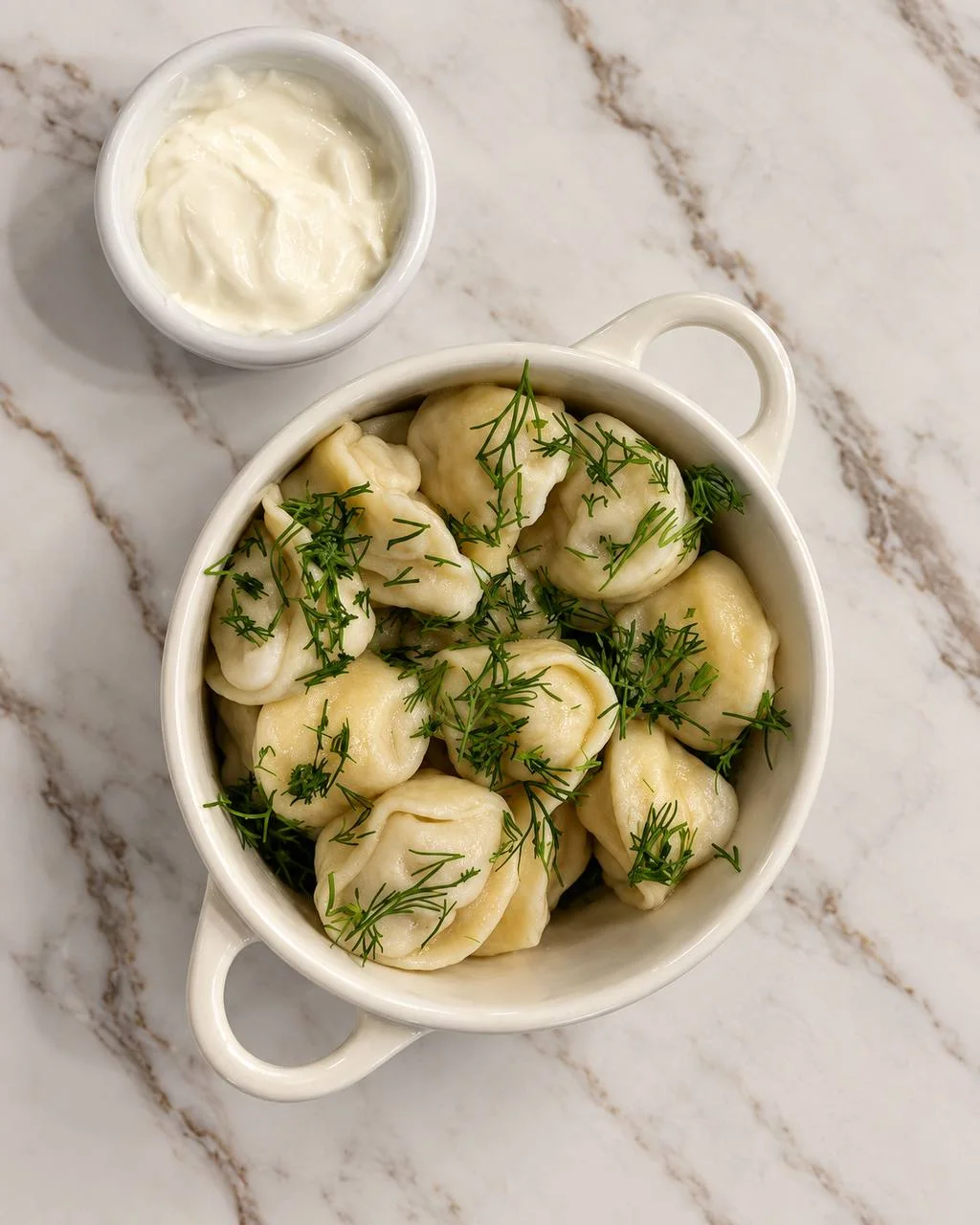
We serve holubtsi the way it has always been eaten, family style, set at the center of the table alongside a bowl of Borshch or a plate of Potato Varenyky, so more than one kind of comfort fills the table at once and everyone reaches in with their own spoon. A cup of warm Uzvar rounds the meal out nicely, its dried-fruit sweetness offering a quiet contrast to the tomato and cabbage. We have not tried to dress holubtsi up for a menu, because it does not need it. We have only tried to give it the time that making it well actually takes, the same way it has been made at Ukrainian tables for generations before it ever reached ours here in Fairfax.
Come see for yourself how much flavor an hour of patience can hold — stop by SimSim on Main Street in Fairfax and order the holubtsi. Ask for extra sour cream on top, the way Ukrainian tables have always finished it.