How cardamom, dried lime, and saffron build kabsa's layered flavor, and what separates our chicken and lamb versions of this Saudi and Gulf classic.
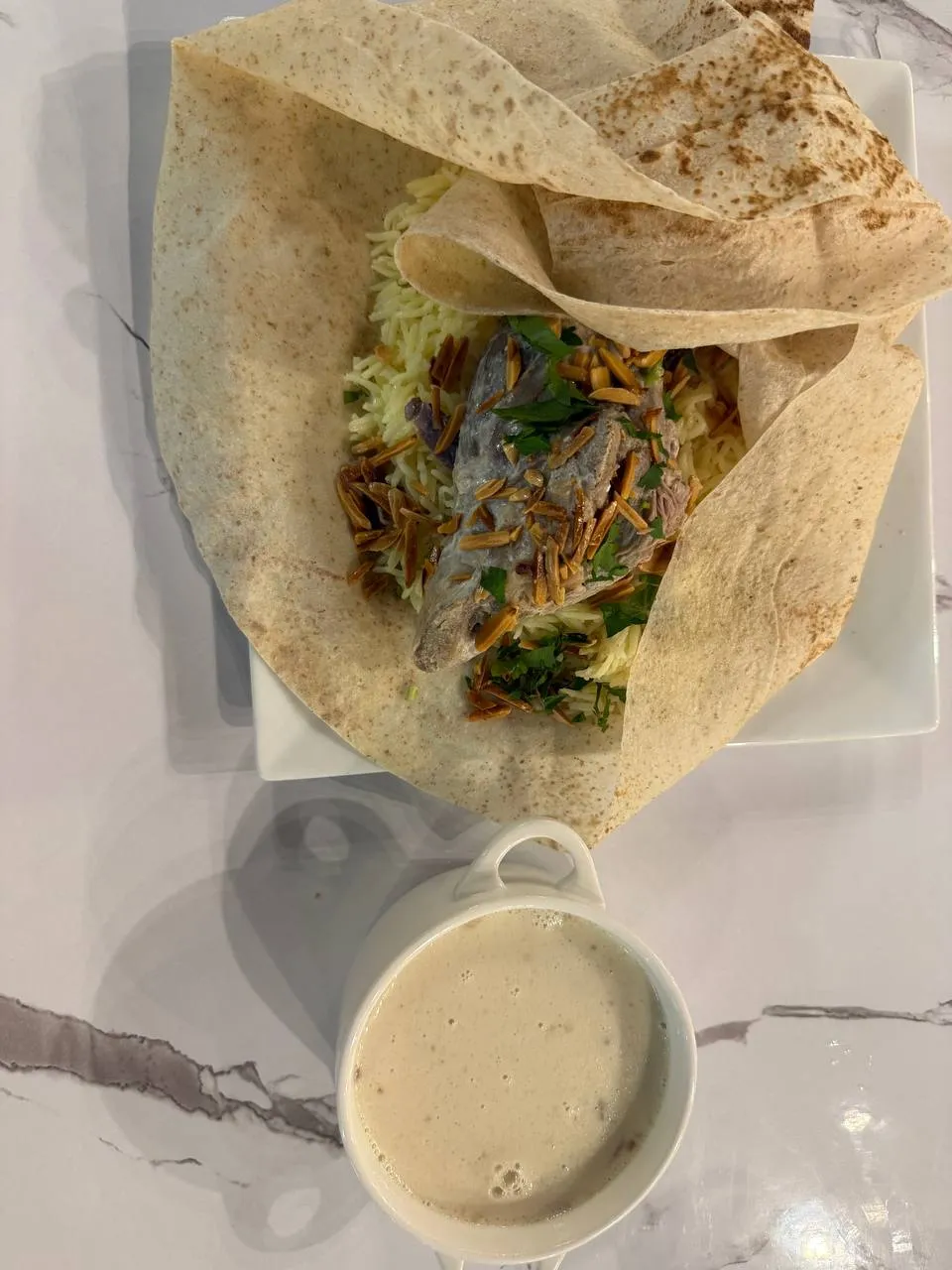
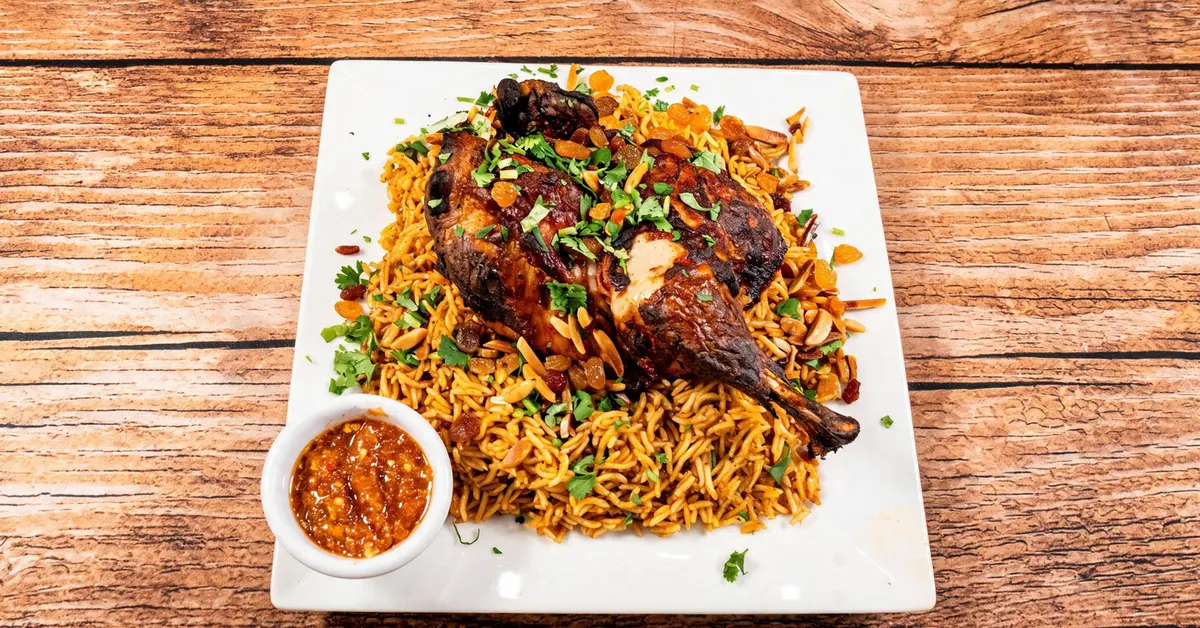
Kabsa is the dish that turns a meal into an occasion. A wide platter of long-grain rice, stained gold and deep amber from the pot it cooked in, sits beneath a whole piece of chicken or a portion of lamb that has spent the better part of an hour soaking up everything simmering below it. It's a Saudi and Gulf dish at heart, built around one deceptively simple move: cook the rice right in the meat's own broth, so nothing goes to waste and everything ends up as flavor. On our menu it comes two ways, chicken or lamb, and each tells a slightly different story about the same idea. Every version keeps the same logic: the rice is not a side here, it's the record of everything that happened in the pot before it arrived.
Spice Layering, Not Just Spice
What separates kabsa from a simply seasoned rice is timing. The spice doesn't get stirred in at the end — it's built in stages, each one added at a different point so the flavor develops instead of sitting on top. Whole cardamom pods and cinnamon bark go in early, toasted alongside the meat before any liquid touches the pot. Cloves, black pepper, and bay leaf follow it into the broth as the meat simmers. Saffron threads are bloomed separately in a little warm broth and stirred through near the end, so their color and aroma survive instead of cooking away for an hour. By the time the rice goes in, it isn't taking on one flavor — it's taking on all of them, at different strengths, which is why a good kabsa tastes complicated even though the ingredient list isn't especially long. We season each pot with a generous hand, then let the rice sit off the heat for a few minutes at the end so the grains finish absorbing rather than steaming away.
How It Comes to the Table
- Toasted almonds or cashews, scattered over the rice right before it goes out for a little crunch against the soft grains
- Golden raisins, tucked in for small bursts of sweetness against all that savory broth
- Crisp fried onions, added at the very last minute so they never lose their snap
- A fresh lime wedge on the side, a bright counterpoint to the dried lime that's been simmering in the pot
- A scatter of chopped parsley over the top, more for a clean finish than for flavor
The Ingredient That Makes Kabsa Taste Like Kabsa
If one ingredient tells you you're eating kabsa and not another spiced rice, it's dried lime. Whole limes are boiled and left to dry until they turn hard and almost black, then cracked or pierced before they go into the pot. Dried lime doesn't taste like fresh citrus — it's sour in a deeper, almost smoky way, with a bitterness at the edges that fresh juice can't produce. A few whole dried limes simmered into the broth are usually enough to carry that note through the entire pot of rice. It's a small, unassuming ingredient doing an outsized amount of the work.
Chicken or Lamb — Two Different Kabsas
On our menu, kabsa comes chicken or lamb, and the choice isn't just a protein swap — it changes the dish. Chicken kabsa cooks faster, and the result is lighter: the broth stays cleaner, and the spice blend reads brighter against mild meat. Lamb kabsa asks for more patience. The meat simmers longer to get properly tender, and in that time it gives more of itself back to the pot — the broth turns richer and heavier, and the rice cooked in it ends up carrying almost as much lamb flavor as the meat itself. Neither is the authentic version with the other as a substitute; they're both standard ways to make kabsa, suited to different appetites and different tables.
One Dish, Two Kitchens
Kabsa belongs to Saudi Arabia and the wider Gulf, and we're not going to blur that line — the dried lime, the spice sequence, the whole bird or shoulder set on top of the rice are Najdi and Gulf technique, specifically. What we will say is that the instinct behind it isn't confined to one region: cooking one big, generous pot for the whole table to share, meant to be dug into rather than portioned out, turns up across this part of the world in dishes that get there by very different routes. Our own Maqluba, made by special order, reaches the same generosity by layering rice, meat, and vegetables in one pot and flipping the whole thing out at the table; Mansaf gets there by simmering lamb in tangy dried-yogurt sauce over rice instead of broth. None of these dishes are doing the same thing in the pot. What they share is the occasion: rice built to feed a table, not a plate.
Kabsa is meant to be eaten the way it's served — family-style, from one platter, with the rice getting more flavorful the closer you get to the bottom. Come try it both ways: chicken kabsa bright and clean, lamb kabsa deep and rich, and decide for yourself which one earns its place at your table.