Inside mansaf, the celebration dish of Jordan and Palestine — jameed's tangy sauce, shrak bread, and slow-cooked lamb, and why it marks weddings and homecomings.
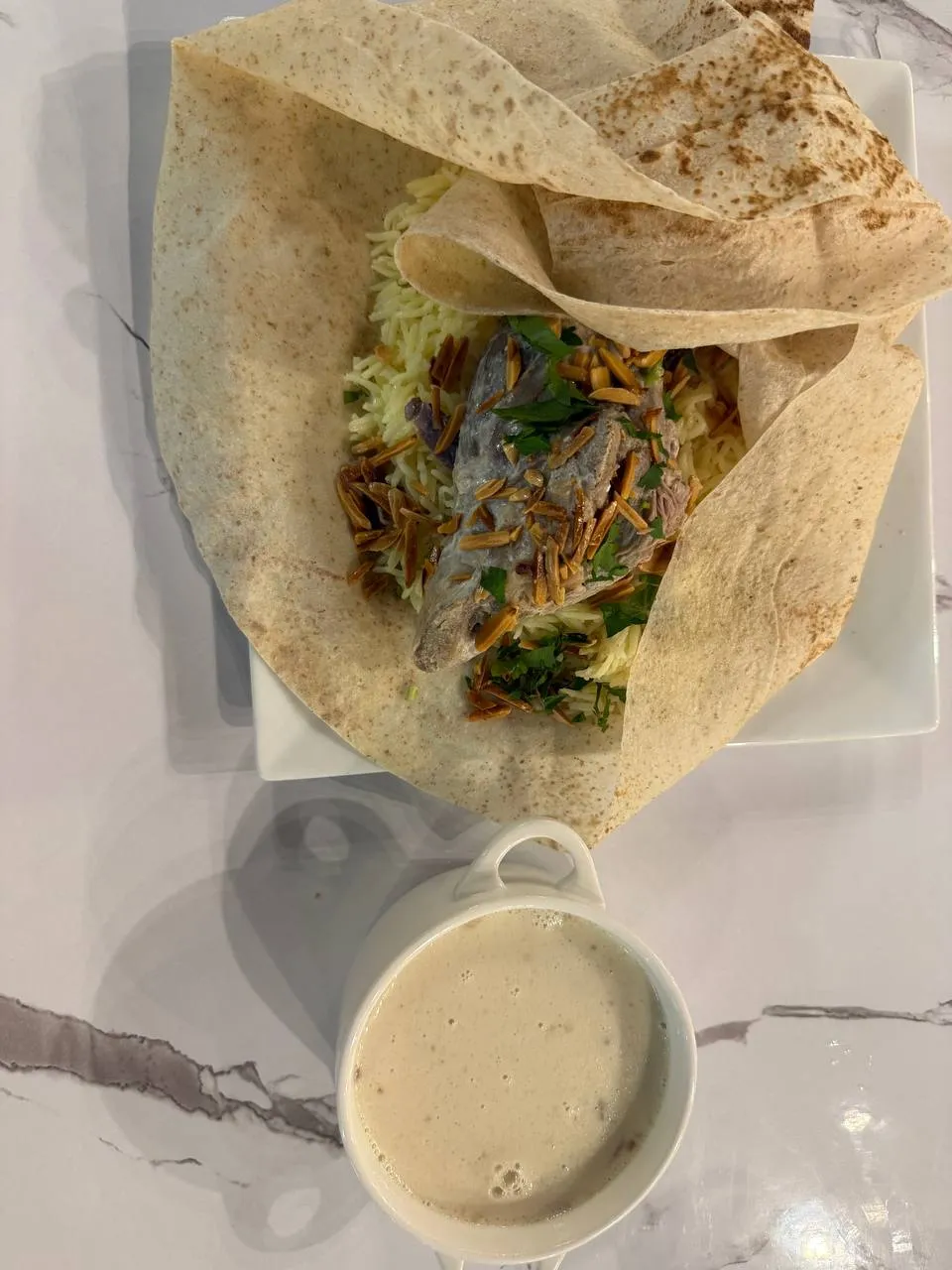
There is a sound that precedes mansaf before you ever see it arrive: the clink of a wide platter being set down, and often, applause. In Jordanian and Palestinian homes, mansaf isn't plated to order — it is built as one enormous, shared dish and carried to the table as an event in itself. Layers of thin shrak bread soak up a tangy, slow-simmered sauce made from jameed, fall-apart lamb rests on top, and toasted almonds and pine nuts finish it. It is, by wide agreement, the most ceremonial dish in the Levantine kitchen, and it is the one we are proudest to carry on our own menu at SimSim.
Jameed: The Soul of the Sauce
Jameed is what separates mansaf from every other yogurt-based dish in the region. It starts as ordinary yogurt, usually from sheep's or goat's milk, that is salted, strained, and then dried into hard, pale balls that once let households keep a dairy staple on hand for months without refrigeration, long before anyone had a freezer. To cook with it, the dried jameed is soaked, broken down, and whisked back into a liquid, then simmered slowly and stirred often so it stays smooth instead of splitting. Combined with the lamb's own broth, it turns tangy, slightly sharp, and remarkably rich, with real depth behind it. That long simmer is what gives mansaf its instantly recognizable sourness: nothing like a mild yogurt sauce, and nothing you can rush.
Shrak: The Bread That Carries It All
Beneath the rice and lamb sits a layer that rarely gets its due: shrak, a bread rolled paper-thin and baked quickly until it's soft enough to soak up the jameed sauce without falling apart. It's the foundation of the whole platter, laid down first so it can catch every drop of sauce that would otherwise pool at the bottom of the dish, then topped with rice and finally the lamb. Without it, mansaf is just rice and lamb in a sauce. With it, every bite carries bread, rice, sauce, and meat together, which is exactly the point — mansaf was never designed to be separated into components.
Lamb, Slow-Cooked Until It Yields
The lamb itself is cooked low and slow, often on the bone, until it releases easily with a fork and has given most of its flavor back into the broth that becomes the jameed sauce. We take that same patience with lamb across our kitchen — it's behind our Lamb Chops and Lamb Kabob, and behind Haneeth, our slow-roasted lamb shoulder, a dish with Yemeni roots that has long since found a home on tables across the Arab world. For mansaf, that lamb is piled high over a bed of simply seasoned rice cooked in the same broth, so every grain carries a trace of the sauce before the jameed ever reaches it, and the sauce itself stays the star rather than competing with heavy spice.
A Dish Meant for a Crowd
Mansaf was never built for one plate. Tradition calls for it to be eaten by hand, gathered from the platter's edges toward the center, with everyone reaching into the same dish rather than serving out individual portions. There is an order to it, too — elders and honored guests are often invited to eat first, a small courtesy built into a dish that is otherwise about everyone sharing equally. That communal shape is exactly why mansaf shows up at the biggest moments in Palestinian and Jordanian life rather than as an everyday dinner. It's less a recipe than an announcement: something important is happening here, and everyone is invited to the same table.
- Weddings, where mansaf is often the one meal the entire gathering shares at once
- Homecomings, welcoming a family member back after time away
- Graduations and other milestones worth marking together
- Reconciliation meals, where sharing mansaf signals that a dispute has been settled
- Hosting an honored guest, when serving mansaf is itself a gesture of respect
Why We Serve Mansaf at SimSim
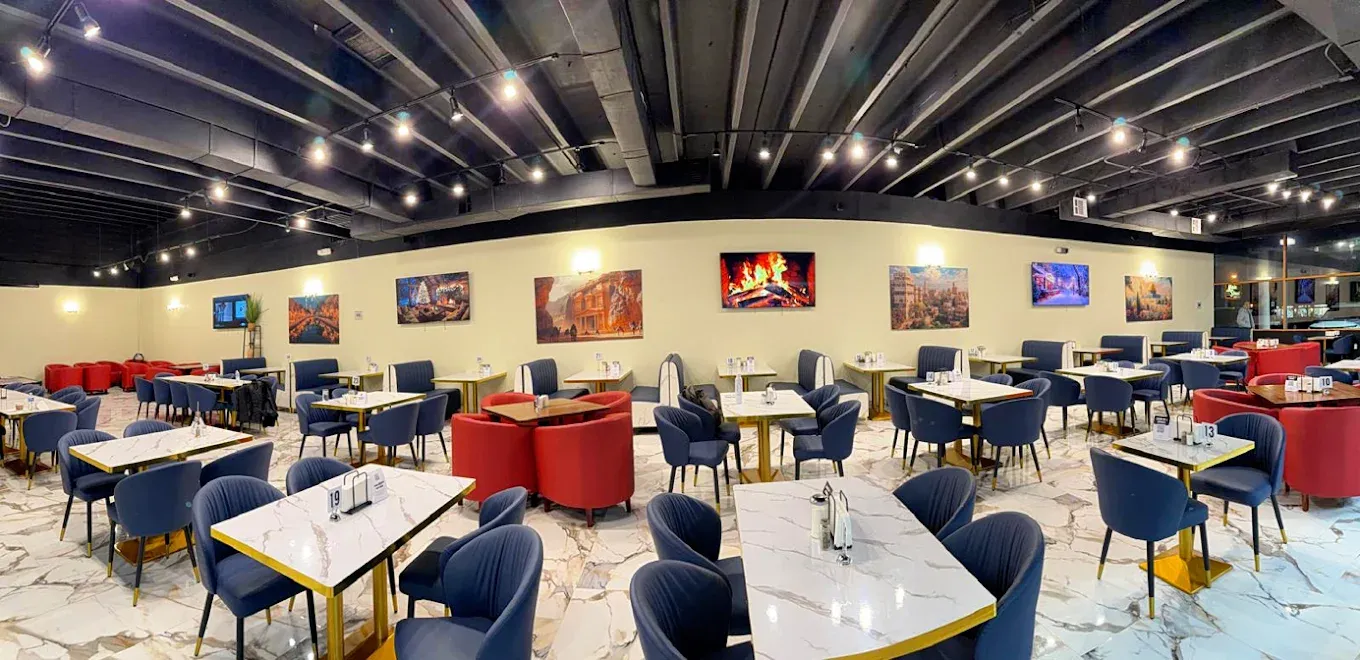
We don't treat mansaf as a novelty item on our menu — it's one of the dishes this kitchen exists to serve properly. Getting jameed's tang right, keeping the shrak from turning soggy, cooking the lamb until it truly falls apart: none of that happens quickly, and none of it should. It's a dish built for patience, both in the kitchen and at the table, which is exactly why it works best shared rather than rushed. When we put mansaf on the table, we're offering the same dish that has marked a wedding or welcomed someone home in Palestinian and Jordanian households for generations, and asking you to gather around it the same way.
Come share a platter of mansaf with us at SimSim. Order it family-style with a few friends and eat it the way it was always meant to be eaten — by hand, from the center of the table.