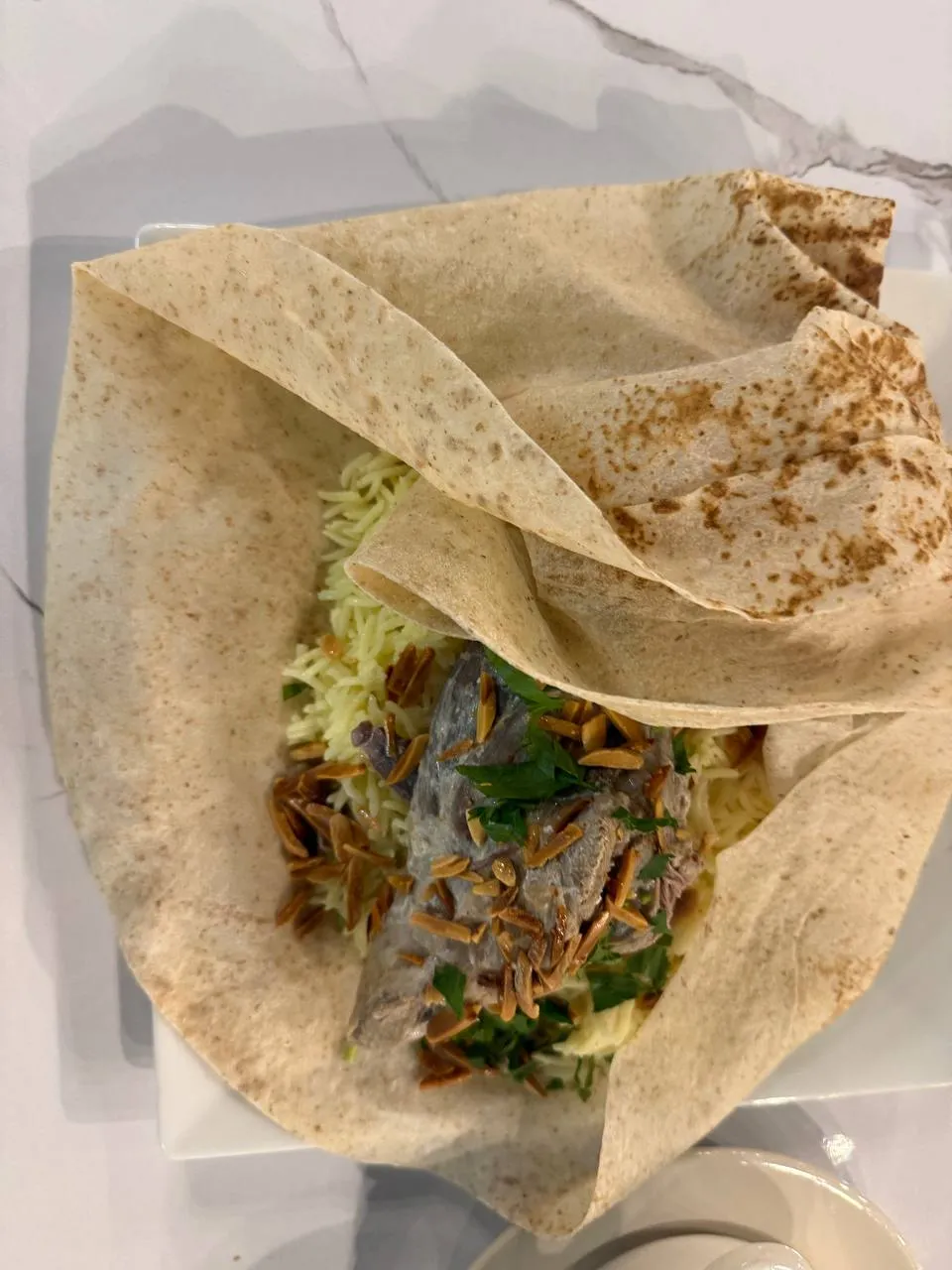
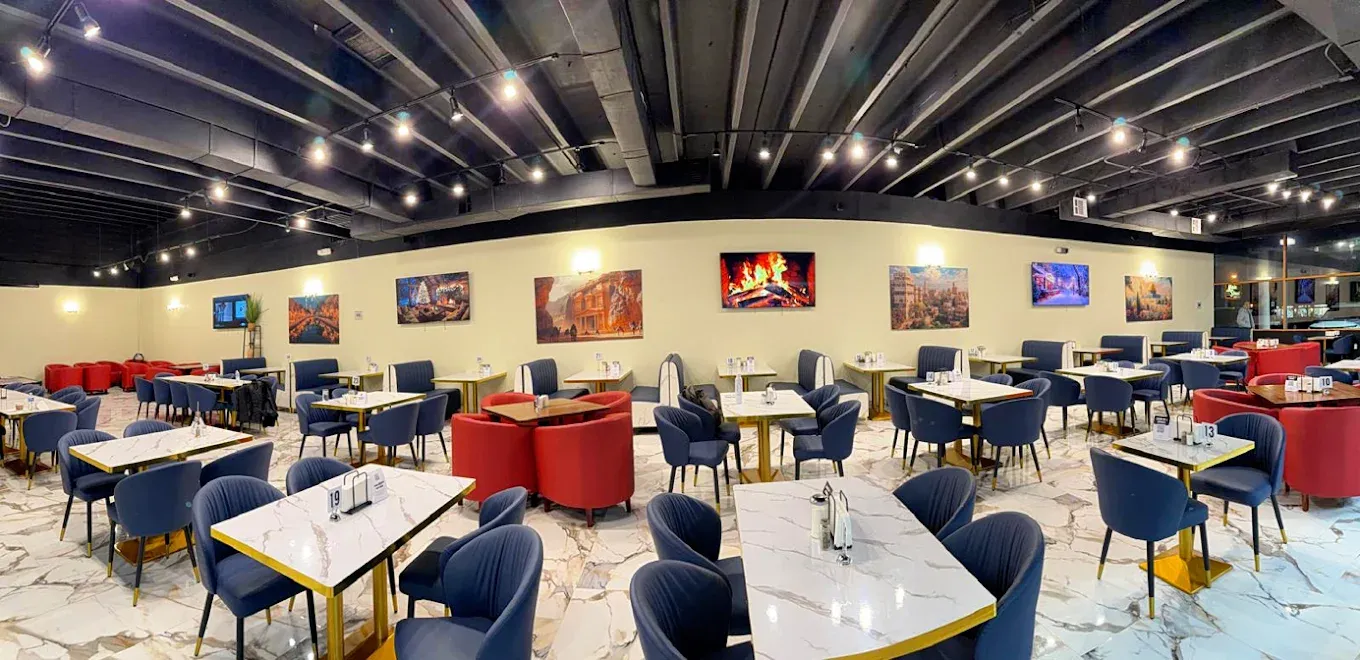
Why SimSim's off-menu maqluba is flipped tableside for special occasions, and why it's built only by advance order rather than kept on the everyday menu.
Certain dishes announce themselves before they reach the table. Maqluba is one of them, and not only for the scent of cardamom and cinnamon that arrives in the dining room minutes ahead of it. It's the moment a server sets a wide platter over the pot, holds it steady, and turns the whole thing over in one motion. The name means exactly what it says: upside-down. What was built layer by layer in the kitchen, rice packed over meat packed over fried vegetables, becomes, on your table, a mountain in reverse. The vegetables and meat that simmered at the base now crown a dome of golden rice, arranged in a shape nothing like what the kitchen saw a moment before. It's a small spectacle built entirely out of patience, and worth knowing the story behind before it ever reaches your fork.
What Upside-Down Actually Means
Maqluba earns its name from the way it's built, not the way it's eaten. Everything goes into a deep pot in a fixed order, and nothing gets stirred or tossed together along the way. The layers stay separate and intact right up until the flip, the one moment they're allowed to trade places, bottom becoming top, top becoming base.
- Fried eggplant, cauliflower, and potato go in first, caramelized until they hold their shape. They'll crown the platter once the pot turns over.
- Chicken or lamb, seasoned and browned, layers in next and simmers until it's tender enough to pull easily from the bone.
- Rice seasoned with cinnamon, allspice, and cardamom is packed on top last. It slow-cooks until it's taken on the color and flavor of everything beneath it, and becomes the foundation the instant the platter is flipped.
A Centerpiece for Celebration
In Palestinian homes, maqluba is as much an ordinary family dinner as a celebration dish, but it comes into its own when the house fills up. It's a dish for a full table, a Friday gathering, a homecoming, a house suddenly full of relatives who arrived hungry. Part of that is practical: one pot fills a platter that feeds a crowd, and nobody plates it quietly off to the side. Part of it is theater. The flip is meant to be witnessed, guests gathered close, someone counting down, the reveal drawing a reaction a quieter dish never gets. And part of it is generosity, plain and simple. A dish this labor-intensive, layered by hand over hours, only makes sense when there are enough people at the table to do it justice. That's the spirit we want it to carry at SimSim.
Why We Serve It Only by Special Order
You won't find maqluba listed next to our Kabsa or Mansaf on a typical night, and that's deliberate rather than an oversight. Done right, it can't be rushed to fit a fast-moving dinner service. The vegetables need to fry separately, the meat needs time to turn tender enough to fall from the bone, and the rice needs to simmer long enough to absorb everything layered beneath it, then the whole pot needs to rest before it's ever turned out. It's also built to the size of the group eating it, not portioned out plate by plate the way a dish like our Chicken Shish Taouk can be. So we ask guests to arrange it with us in advance, with enough notice for our kitchen to build the exact pot your table needs, size it to your group, and time the flip for the moment you're actually seated and ready to watch it. Call ahead and we'll work out the details together. Calling ahead also means every layer, from the fried vegetables to the very last grain of rice, reaches your table at its best.
The Flip Is the Point
We could serve maqluba already plated, layers hidden, and it would still taste the way it's supposed to. But that would miss what makes it a celebration dish in the first place. The upside-down moment isn't a garnish on the experience, it is the experience, the same reveal that has greeted birthdays, graduations, and Friday lunches in Palestinian homes for generations. When we carry a pot to your table and turn it over, we're not performing a trick for its own sake. We're carrying forward a tradition of gathering people specifically to watch abundance appear, all at once, right in front of them, the same way it's been done at countless tables before ours. Every pot we build carries that same intention forward, a small ceremony we're glad to keep alive one table at a time.
Planning a birthday, a reunion, or any table full of people worth celebrating with? Maqluba is a special order rather than a MyKeFi listing, so call ahead and tell us how many you're feeding, and we'll build a pot just for your group, timed to flip the moment everyone's seated and watching. The rest of the menu is ready to order below.