
A tour of the values that shape Palestinian cooking: shared mezze, generous olive oil, rice at the center, live-fire grilling, and hospitality that never lets a plate go empty.
Ask us what Palestinian cuisine is, and we won't hand you a single dish. We'll gesture at the whole table instead: the round of small plates already circling before the mains land, the rice dish someone insists you take more of, the platter still warm off the charcoal, the tea that appears whether or not you asked for it. Palestinian cooking is less a fixed menu than a set of habits, in how food is grown, dressed, cooked, and, most of all, offered. Some of those habits are distinctly Palestinian; others are shared across the wider Levant and beyond, which is part of what makes this table feel so familiar to so many people. Either way, they are what we built this kitchen around, and they're the reason we open every table the same way, whether it seats two or twelve.
Everything Arrives to Be Shared
A Palestinian meal rarely begins with one ordered dish; it begins with mezze, a spread of smaller plates meant to be picked at, passed, and refilled rather than portioned onto a single plate. Bread does a lot of the work here, dragged through hummus and baba ghanoush instead of eaten alongside them. Dolma get split down the middle. Fattoush and tabbouleh circle the table in the same bowl everyone reaches into. It is a different geometry of eating than a plate built for one person: the food organizes itself around the group, and a good meal gets judged as much by the conversation between bites as by any single bite itself. A typical spread might include:
- Hummus and baba ghanoush, for the bread that is already on the table
- Dolma, rolled tight and eaten by hand
- Falafel, cracked open while it is still hot
- Fattoush and tabbouleh, both built for a shared bowl rather than a single plate
Olive Oil Is the First Ingredient
Long before it finishes a dish, olive oil starts most of them. It is the medium onions soften in, the drizzle that lands on hummus at the table, the finish over a warm plate of baba ghanoush. Groves have shaped Palestinian land and Palestinian cooking for generations, passed down more like an inheritance than a purchase, and that relationship shows up less as a flavor note than as an assumption: good olive oil is not a garnish here, it is a given, present in some form in nearly every savory dish that leaves our kitchen. We pour it the same way at the table as we do in the kitchen, generously, and without waiting to be asked.
Rice Is Where the Celebration Happens
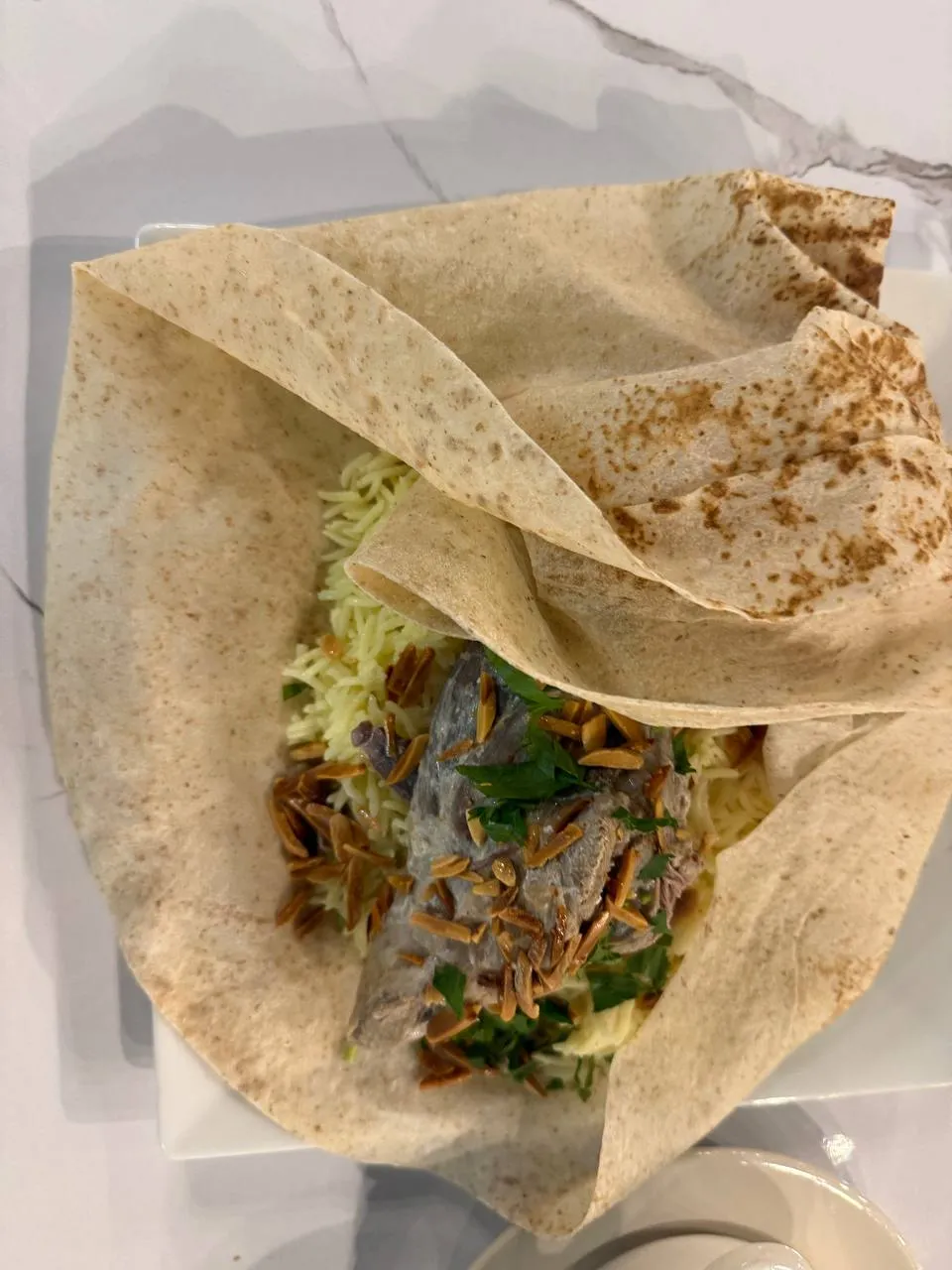
When a Palestinian table is marking something worth marking, rice tends to sit at the center of it rather than off to the side. Mansaf is built around it. Maqluba, which we make off-menu by special order because it deserves that kind of attention, is quite literally named for what happens to the rice when the pot gets flipped at the table. Even Kabsa, more common across the wider region, follows the same instinct: rice cooked long enough to take on the meat, the spice, and the broth around it, so that it reads as its own dish rather than a base for something else.
Cooking Over Fire
Cooking over live charcoal is one of the oldest and steadiest threads running through Palestinian cooking, which is why the grill is at the center of what we cook rather than an afterthought. Lamb kofta, lamb kabob, chicken shish taouk, and the mix of skewers we serve as our Mix Grill all depend on real fire for a char no oven quite replicates, and on the smoke that reaches everything cooking nearby. Haneeth takes the opposite, slower route, cooked low and long until it falls apart on its own rather than over a fast flame. The two methods look nothing alike, but they share a philosophy: let the fire, and the time it takes, do the real work rather than reaching for a shortcut around it.
Hospitality Is the Organizing Value
Underneath the shared plates, the olive oil, the rice, and the fire sits a single expectation: a guest is never left wanting. That is the actual organizing value of Palestinian cooking, more than any one technique or ingredient, and it is what every other habit at this table ultimately serves. It is why plates get refilled before they run empty, why tea or Turkish coffee tends to appear at the end of a meal whether or not anyone asked for it, and why portions are built assuming a table will keep growing rather than staying fixed at however many people first sat down. It is also why so much of this food travels so easily between cultures: hospitality translates even when a specific dish's name does not. We did not have to invent that instinct for this kitchen. We only had to make sure the food could keep up with it.
Curious what all of this looks like on one table? Come order family-style at SimSim and let a spread of mezze, a shared platter off the grill, and a pot of Jerusalem tea make the case better than we ever could in writing.